1st-7th August

Early August continued to deliver a trickle of departing summer visitors pausing on the Downs or along the coastal strip to feed up prior to heading out across the Channel.

Goring Gap


                                                   Cattle Egrets Goring Gap (Ralph Simpson)

On Friday 1st August Ralph Simpson photographed five Cattle Egrets flying in from the east, which nearly landed on the beach with 30+ Little Egrets before having second thoughts and continuing west. Presumably one of these was the bird he had found on 30/7 returning with its friends. Also present on the beach were Wheatears (2),  whilst waders included Turnstone (18) and Dunlin and Sanderlings (7).  Nearby Swifts (8) and Swallows (15) were hawking insects over Ferring County Centre.

Cissbury

There seemed to be an arrival of Willow Warblers on Friday 1st August with 20+ birds recorded around The Ring but no other migrants could be located with them. The next day (2/8) four Redstarts were found in the north east corner and the ringing station on the northern flanks caught a Nightingale, Sedge Warbler, Reed Warbler and lots of Willow Warblers. However a day later (3/8) the same area was virtually birdless with only a single Redstart remaining.

Monarch’s Way to Steyning Round Hill

The first Whinchat of the autumn was found near the Farmer’s Memorial on 2/8 and the following day two birds were present in the set aside fields at the bottom of Monarch’s Way just north of Cissbury and a Hobby flew over Stump Bottom.

The area around the Farmer’s Memorial held Redstarts (2), Wheatear (2), Lesser Whitethroat, Common Whitethroat (12) and Willow Warblers (2) on 5/8 with at least one Redstart and the Lesser Whitethroat still present the following day.

Sompting

Two Wheatears were present on the Downs above Sompting Church on 2/8.

Town Centre

Two Crossbills flew south west over King Edward Avenue (2/8) and a Wheatear was on the beach opposite Marine Gardens (5/8). The two escaped Common Mynas on the grass outside Durrington Health Centre (2/8) were a surprise for the finder but are probably best ignored. 


July Summary

Whilst most people see July as the start of the summer and look forward to the school holidays, we at Worthing birding are already thinking about the start of autumn. Many of our summer visitors will soon be heading south and will pause to refuel on the coast before continuing their migration. This can begin as soon as mid July but it is usually a month of waiting and hoping. However for those interested in butterflies (or moths) there was plenty to keep them occupied through the warm sunny days.

Early July started (and continued) with wall to wall sunshine and post breeding flocks of Swallows stooping over the wheat fields on the Downs north of Cissbury,  but for some the main event of the first half of the month was the Worthing Birders Summer Drinks on the 17th July. 

Quail - One was heard in the oat field south of the path between Lancing Ring and Steep Down on 10/7 and 24/7 and another near the gate on the north side of Steep Down on 18/7. Meanwhile a third bird was singing in the huge wheat fields south of Steyning Round Hill from 20/7 until 25/7.

Brooklands Lake  - Juvenile Mediterranean and Yellow-Legged Gulls were reported from  18/7. 

Goring Gap  - Early returning Common Gulls (3) were noted on 11/7 with 20+ Med Gulls including a couple of juveniles. A single Whimbrel was reported on multiple dates between 11/7 and 30/7, with Curlew on 12/7 and 16/7. 

Autumn is Up and Running 

The Birders Drinks raised expectations (fuelled perhaps by the odd shandy)  and rekindled enthusiasm to search the Downs for migrants and the very next morning our hopes were answered. Admittedly it was the hard working Juliet and Chris Moore that found a lovely male Redstart on Findon Gallops on 18/7 rather than anyone who had been at The Cricketers, but it was the first migrant of the autumn and whilst the floodgates didn’t exactly burst open, inevitably more followed.  

Two more Redstarts were at Patching Hill on 25/7 and still present on 28/7 along with a Sedge Warbler and Lesser Whitethroats (2). By the last two weeks of the month Willow Warblers were being reported in small numbers from multiple sites and the first Wheatear of the autumn was present along Monarchs Way to the north of Cissbury on 28/7.

Findon Gallops held Lesser Whitethroat (4), Common Whitethroat (8) and a Garden Warbler on 30/7.

Crossbills - It seems to have been a very good year for Crossbills with reports from across the county, and the Worthing area didn’t miss out. Patching Hill seemed to be something of a hot spot, with 43e on 25/7 and another 11e / 5sw on 28/7. Meanwhile small groups were seen flying east over the town on 27/7 with sightings from Lower Salvington (14e) and Rogate Road (8e). 

Swifts - Perhaps the first signs of departing Swifts were 85e past Goring Gap on 23/7 and post breeding flocks of 30 over Cissbury and 60+ feeding over the plantation at Goring Gap on 24/7. Birds were still also being reported from breeding territories at the end of the month - but they will not be around much longer. 

However we had to wait until 30th July for the best bird of the month, when a Cattle Egret was seen by Ralph Simpson heading west over Goring Gap, although you need to read the next instalment to hear how he would better this in August. 


June Summary

Highlights

An Osprey flew north over Rustington on 2nd June (C Jupp) and four Spoonbills headed west over Goring Gap on 16th June (R Ives).

Several Curlew heading west at Goring Gap on 22/6 and 23/6 were possibly the first autumn passage waders of the season and a Common Sandpiper on the beach on 26/6 (R Simpson) was almost certainly a returning migrant, whilst a handful of Sanderling and Turnstone over-summered on the beach.

                                                 Common Sandpiper - Goring Gap ( R Simpson)

Quail were heard uttering their distinctive “wet-my-lips” call on the Downs north of Cissbury between 27th May - 1st June and near Steep Down on 6th June.

Seawatching

There was some surprisingly late sea watching records with Manx Shearwater past Marine Gardens (1e) on 3/6 and Arctic Skuas past Goring (3e) on 9/6 and Marine Gardens (3e) on 11/6. 

Regular Breeders

                                                Yellowhammer  - Cissbury ( Duncan Kay)

As expected June was a very quiet month on the birding front with most of the news relating to resident breeding species.  Stonechats, Corn Buntings, Yellowhammers and Whitethroats all bred successfully around Cissbury with at least two different singing male Lesser Whitethroats also holding territories. Young Green Woodpeckers and Mistle Thrushes were also very much in evidence by the end of the month.

Swifts were reported throughout the month across the area with the biggest report being 23 near Broadwater and 12 along Boundary Road though at some traditional breeding areas numbers seem to be lower. The Worthing and Adur Swift Group do a fantastic job monitoring the local population and engaging with the public to raise the importance of Swift Conservation. 

Elsewhere up to six Reed Warblers were present at Brooklands with several males continuing to sing throughout month. 


Guest Blog Mike & Karen Galtry - Much ado about Mothing


Mike Galtry

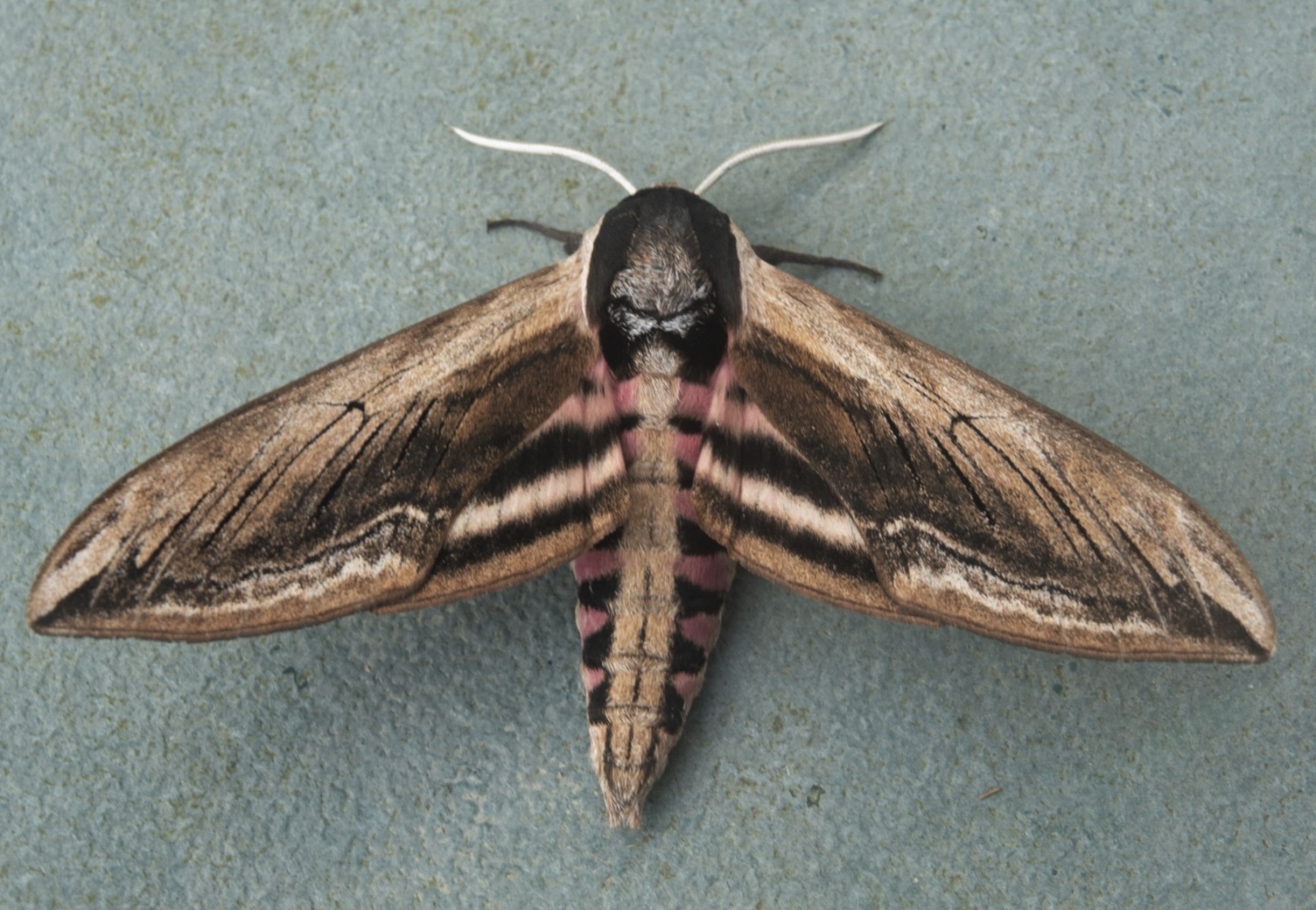
                                                             Privet Hawkmoth (Mike & Karen Galtry)

Given that the birding has been pretty awful so far this year, perhaps it’s time to have a

look at some other wildlife. We run a moth trap at home, as do many others in the

area, and we have had our most diverse start of the year ever.


After a couple of traps in March yielding only 5 species and a complete blank in April,   

where a combination of bad weather and a holiday meant that we didn’t trap at all, it

wasn’t looking that impressive.


May is when the mothing picks up, and this has equalled 2024 as our most diverse May, with 64 species of macro moth and 12 species of micro moth recorded. (Given that it’s only recently that we’ve bothered with micros, a record total is not unlikely, but this has been a record for macros as well.) It’s always nice to brag about a new species for the list, and Great Prominent was a welcome addition, 

Great Prominent ( Mike & Karen Galtry)


The highlight of 
May for us is the Hawk-moths. Big, chunky and beautiful, they’re not rare (other people trap rarities, not us), but it’s pretty special to hold an insect with a wingspan of about 10 cm and wearing stripy pink pyjamas. We had 5 species (out of the 9 we have recorded at home). Other classy common moths included Buff Tip and Waved Umber.


Elephant Hawkmoths ( Mike & Karen Galtry)


June’s weather, particularly when we had a bit of cloud cover and south easterlies, led to an explosion of species. 68 micro species and 106 macro species, both way higher than our previous highs, included our only other new macro: a Red-belted Clearwing that flew in through the window. (They come to pheromones not light, so Karen obviously smells good.) An overdue Eyed Hawk-moth and a herd of Elephant Hawkmoths provided some bulk. 


Red Belted Clearwing ( Mike & Karen Galtry)


Our second ever Lilac Beauty was a treat, and we added 14 micro moths to our house list. (None of these met the editorial “tarty moth”). 


Lilac Beauty  (Mike & Karen Galtry)


Our year list to the end of June stands at 203, and with July as normally the biggest

month for species, things are looking promising. This list isn’t that special: I’m sure

there are others in the surrounding are who do as well or better.


Who needs butterflies?


Common Purple and Gold (Mike & Karen Galtry)


Weekly Round Up - What happened to the rest of May

12th-18th May

Rarities

As predicted last time, it would either be a rarity or a late trickle of seabirds moving up channel that would make or break the blog as May progressed. There were several rarities reported in Sussex, but all were well outside the Worthing 10km radius, so any local birders wishing to try and see them had to travel.

                                                   Black Stork (& Swift) Richard Phillips

Or may be not. With news of a Black Stork at Pulborough Brooks early morning on Wednesday 14th May some may have rushed off up the A24. However when it was reported to have flown off high to the south east, Richard Phillips had a hunch that it might head along the Chanctonbury escarpment and went out into his Steyning garden and waited.  Twenty minutes later he picked up the unmistakable silhouette  of a large stork soaring over the Downs towards him.   Despite the harsh lighting it was clearly the Black Stork, with a black neck, all black underwings and a neat white belly, rather than one of the Knepp White Storks taking a wander. 

This must have been a pretty impressive sight and would appear to be the first Black Stork noted in our area since a record over Cissbury from August 1991. Granted that Richard’s garden only just sneaks into the Worthing 10km, but the bird was flying south east and must have briefly moved through our airspace before being picked up again further east over Devil’s Dyke and then Beachy Head later that day.

Seabirds

Five Arctic Skuas were noted past Goring Gap and Marine Gardens including four pale morph birds close to shore on Monday 12th May. Common Scoter (155e) and Bar-tailed Godwit (1e) and Whimbrel (3e) were also recorded before Worthing’s die hard sea watchers packed up for the Spring.

Migrants and Summer Arrivals

The only other sighting of note was a Hobby hunting over the fishing ponds at Black Ditch, whilst a Common Sandpiper was present at Patcham Pond, slim pickings indeed for mid May. 

19th- 31st May

The rest of May just slipped away almost unnoticed. There were plenty of breeding birds singing on the Downs with Whitethroats, Blackcaps, Yellowhammers and Corn Buntings, whilst Swifts continued to be reported in small numbers over the town. However there were virtually no other reports across our immediate area as our attention shifted away from the coastal areas to the inland Sussex heaths.


Great Expectations - 5th 11th May

 Seawatching

They say good things come to those that wait, and for Worthing Seawatchers and the two resident Grey Seals off Marine Gardens they waited, and then they waited some more, as cold northerly winds brought skua passage to a grinding halt for much of the week.

Monday 5th May

Two Hobbies seen flying in off the sea and north over the beach and 31 Whimbrel east were the only birds of note between 06:30-08:00.

Thursday 8th May

A good early morning movement of Whimbrel 106e and a tight flock of Red Knot c15e but precious little else.  However on Thursday afternoon the first two Arctic Skuas of the week (one light phase / one dark phase) passed Brougham Road, followed by two more on the next morning from Marine Gardens. 

Friday 8th May

An interesting morning session with Whimbrel (108e 1w), Curlew (2w), Bar-tailed Godwits (3e) in a group with Grey Plover (5e) Common Sandpiper (1e) and two Arctic Skuas chasing Sandwich Terns. Swallows continued to arrive and frustratingly a raptor watched flying in off the sea and away to the north could not be identified.

Then slowly the wind moved round to the south east, and mid afternoon the stars began to align - “Pomarine Skua very close east past MG @15:09”  So close that apparently even the Grey Seals gave a little fist pump, and then two more at 17:05 which were also seen past Widewater 15 minutes later. Suddenly the wait for 2025 was over and for one MG regular a Saturday trip to the land locked West Midlands was no longer such a worry.

Saturday 9th May / Sunday 10th May

Finally the winds were from the fabled south east so would the flood gates open as we moved into the finale of the spring seawatching season. 

There was a bit more variety on Saturday morning with a single female  Eider, Shoveler (3e), Common Scoter (68e) and an early pulse of distant Kittiwakes (45e).  Waders were well represented with Sanderling (20e), Grey Plover (11e), Bar-tailed Godwits (22e) and Whimbrel (20e). 

But what about the Skuas - well a single pale phase Arctic Skua (08:50) and four together (09:05), all relatively close in was a promising start and then……. Disappointment !!  

Sunday was a similar story, a visiting birder recorded Common Scoter (95e), Kittiwake (12e). Grey Plover (40e),Sanderling (42e) but just two Whimbrel. The highlight of the morning being two probable Black-throated Divers. News of a Long-tailed Skua and more Poms further west meant there was more coverage from Marine Gardens in the afternoon and early evening but once again they failed to materialised. 

Despite the anpparently ideal conditions over the weekend it all fizzled out as the promised Poms failed to turn up for their own party. Although there may be a few stragglers next week it feels like this year’s sea watching season is coming to an end.

The Bottle-nosed Dolphins seemed to sense this and put on a superb show  on Saturday morning, coming very close to the shore at high tide to say goodbye. 

The Downs and Inland

Swift numbers increased rapidly this week, with birds being reported from numerous sites around the town and hopefully they will settle down to breed in coming weeks. 

There were very few reports from the Downs this week with summer breeding birds very active. A Reed Warbler on the Downs along Lychpole Bottom was the only migrant news all week.

The next few weeks still hold the chance of a scarce late migrant, such as a Red backed Shrike or even more outrageous a flyover Bee-eater. Watch this space.


POM Alert - “Oh we do like to live by seaside”


The highlight of the Spring Seawatching season is the much anticipated passage of skuas up the English Channel with Pomarine Skua very much the star attraction. The peak time is the last week of April and the first ten days of May ideally combined with south-easterly winds. Then these large majestic birds may be seen powering past our coastline heading for their Arctic breeding grounds.

The more time spent watching the sea the better the chances of seeing this spectacle, though thanks to instant news via WhatsApp groups early warning of birds passing further west can allow Worthing Birders the chance to intercept skuas seen passing Selsey Bill.

This week the winds have been very light north easterly and bright sunshine hasn’t been ideal but after missing the first birds reported moving up the Channel on 26th and 28th, finally the gates opened and although birds didn’t exactly flood through,  those that had the time or could react quickly managed to succeed.

Tuesday 29th April

A magnificent flock of 14 pale phase Pomarine Skuas were tracked from Selsey eastwards and were seen at Rustington, Marine Gardens and then more distantly off Widewater on Tuesday evening. 

Wednesday 30th April

A distant Pomarine Skua was watched passing infront of the wind turbines early morning and then a flock of five birds were tracked from Selsey and were seen passing Goring Gap and Marine Gardens, allowing several birders just enough time to race to the coast to see them.

Thursday 1st May

Three birds passed Selsey very early and were seen about 40 minutes later by those gathered at Marine Gardens passing mid distance.

After that the winds have swung more northerly and for the time being the tap has been turned off. However we are now into the peak time for skua passage and surely there will be more birds moving along our coastline this coming week.